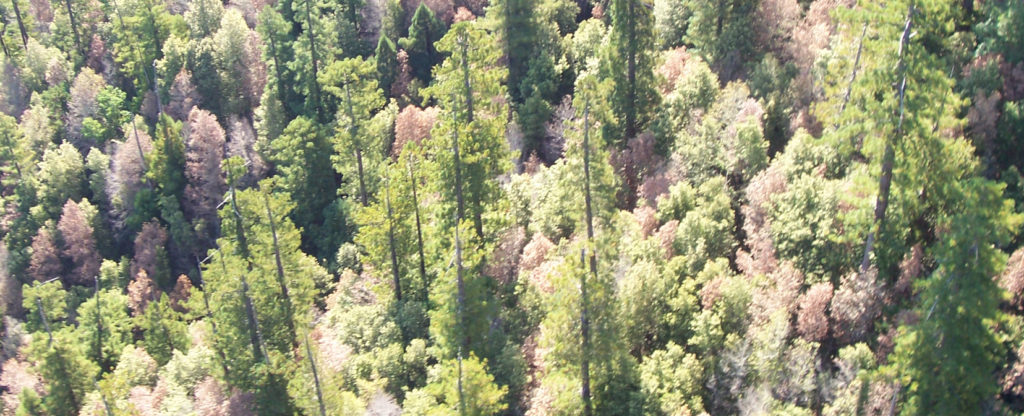
Sudden Oak Death was first recognized affecting oaks in California in the mid 1990s. The disease kills some oak species and has had devastating effects on coastal forests in California and Oregon. In the UK and Ireland, the pathogen is causing extensive damage on Japanese larch (Larix kaempferi) in plantations. Phytophthora ramorum was inadvertently introduced to California forests on nursery stock and, as an invasive species, is quarantined in over 60 countries with restrictions enforced on shipments of nursery stock and other host plant materials. Further background details are on the About Sudden Oak Death.
Relatives of P. ramorum, other Phytophthora species are damaging native and ornamental vegetation throughout California. Unintentional pathogen introductions are an acute concern for restoration of sensitive habitat where restoration nursery stock may serve as a pathway for pathogen introduction into rare, threatened or endangered species habitat. Read more about other Phytophthora species found in native habitats, native plant nurseries, and restoration sites here.
Phytophthora Root Diseases are found throughout most parts of California, including forests, agriculture, and plant production settings. Many reside in the soil but are too small to be seen without magnification, so plant symptoms are used as indicators of infestation. Common symptoms include chlorosis, stunting, dieback, and rotten roots. Forest Phytophthoras of the World provides summary information on many Phytophthora root diseases.
Oak mortality caused by human disturbance occurs everywhere oaks and humans coexist, is year-round and ongoing. Development, construction, overwatering, fires and other activities that people incite in areas with natural or planted oaks can damage or kill trees. Damage prevention is key to sustaining oaks. Injuries may be caused by changes to grade level, trenching, paving, herbicide drift, soil compaction, poor drainage, over pruning, and general poor tree care. This kind of damage may not become apparent for several years so can be difficult to diagnose. Additional support can be found through your local CALFIRE forester, UC Cooperative Extension office, or a certified arborist for additional information.